Are you confused by the different types of e-bike controls? It's a major difference between US and EU markets. Understanding why is key to choosing the right bike for you.
The core reason lies in different laws, riding cultures, and consumer demands. US regulations are more flexible, allowing throttles and higher power for convenience. In contrast, the EU legally requires pedal-assist systems on most e-bikes to encourage exercise and maintain a traditional cycling experience.
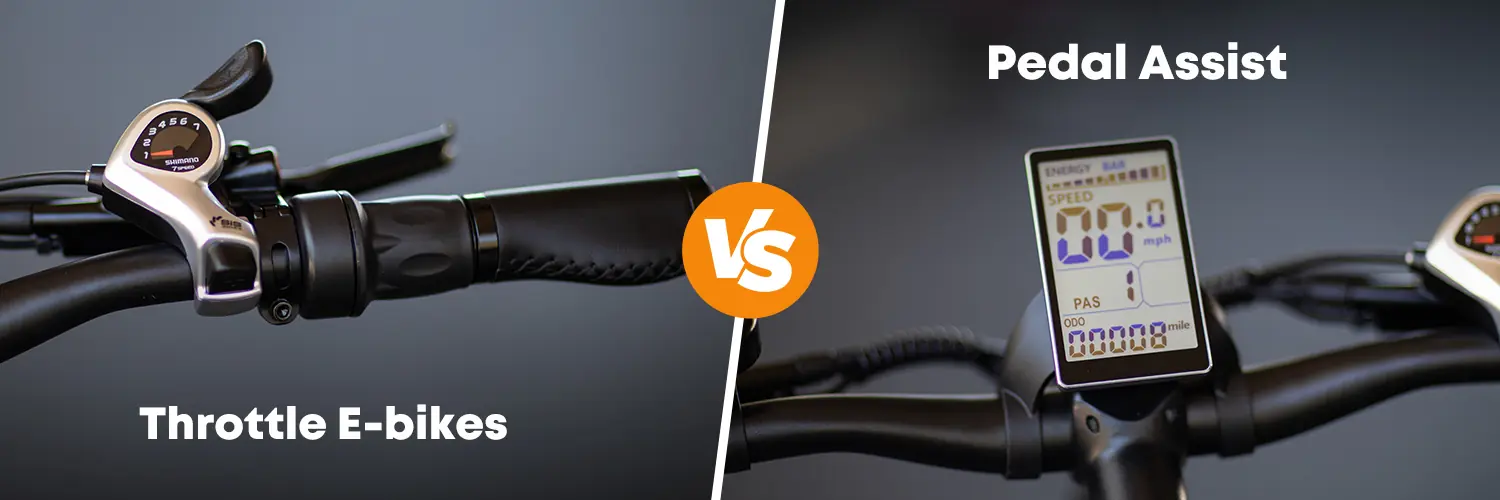
As a manufacturer, I get asked this question all the time by clients looking to enter a new market. They see a best-selling model in the US and assume it will work in Europe, or vice-versa. But it's not that simple. The design choices we make are driven by deep-rooted differences in how people in these regions live, ride, and what their laws permit. Let's break down why these two massive markets have gone in such different directions.
Are E-Bike Laws the Real Reason for the Throttle vs. Pedal-Assist Divide?
Have you ever wondered why finding a throttle-equipped e-bike in Europe is so difficult? It’s not just a matter of preference; it’s baked into the law from the very beginning.
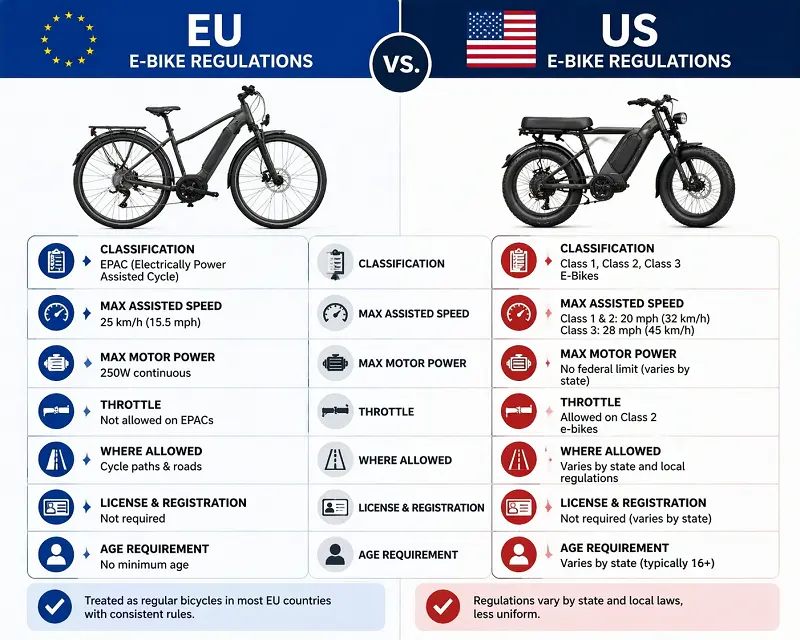
Yes, legal regulations are the most direct cause. The EU standardizes e-bikes as "Pedelecs1," which limit motors to 250W and require pedaling for power. The US has a more relaxed class system, permitting throttles on Class 2 and 3 e-bikes with motors up to 750W.
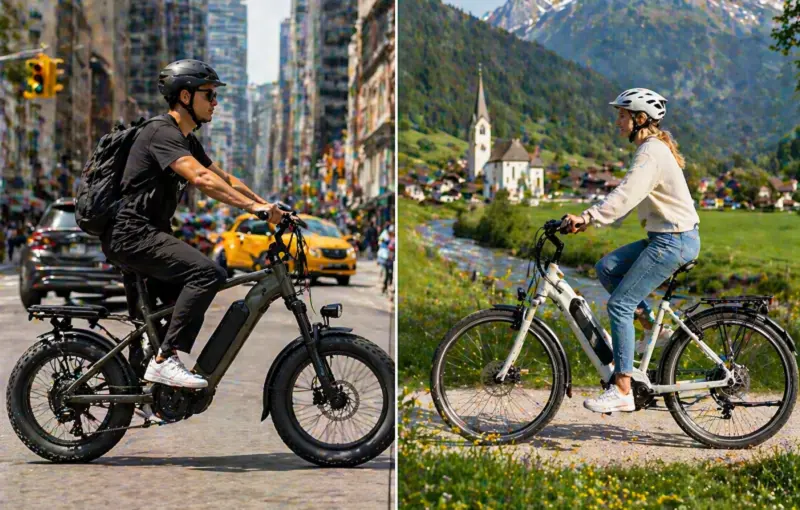
When we develop an e-bike, the first thing we look at is the legal framework of the target market. It dictates everything from motor power to the control system. For us, it’s a clear fork in the road.
The EU's Pedelec Standard
In Europe, the dominant regulation is for "Pedelecs," which stands for Pedal Electric Cycle. The rules are strict: the motor can only provide assistance when you are actively pedaling. As soon as you stop pedaling, the motor has to cut out. Furthermore, the motor's continuous power output is capped at 250W. This framework ensures that the e-bike remains, at its heart, a bicycle. It's designed to assist your effort, not replace it. This is why the Pedal Assist System (PAS)2 is the default and often only option on European e-bikes.
America's Class System
The United States takes a different approach with its three-class system, which offers more flexibility. Class 2 e-bikes3 are specifically defined as having a throttle, allowing the bike to be powered without any pedaling. Both Class 2 and Class 3 bikes can have motors up to 750W. This legal opening for throttles and higher power completely changes the riding experience and what customers expect. It allows e-bikes to function more like scooters, offering instant power on demand.
| Feature | European Union (Pedelec) | United States (Typical Classes) |
|---|---|---|
| Motor Activation | Pedal-Assist Only | Pedal-Assist (Class 1/3) & Throttle (Class 2/3) |
| Max Power | 250W | 750W |
| Primary System | Pedal Assist System (PAS) | Throttle & PAS |
| Legal Focus | Safety, bicycle classification | Flexibility, consumer choice |
Is It All About Culture and How We Ride?
Do you see an e-bike as a tool for a better workout or as a way to get around without effort? Your answer probably reveals a lot about your local riding culture.
Yes, riding culture is a huge factor. Many American consumers prioritize convenience and power, using a throttle for quick acceleration. Europeans often emphasize health and exercise, preferring the active engagement of pedal-assist.
Beyond the laws, the way people use e-bikes in their daily lives shapes the market. We see this firsthand in the OEM/ODM requests we receive from different regions. A US partner might ask for "a beast of a motor with a thumb throttle," while a European partner will specify "a seamless and intuitive torque sensor."
The American Quest for Convenience
In the US, many people view e-bikes as a practical way to replace car trips. The goal is often to get from point A to point B quickly and without breaking a sweat. A throttle is perfect for this. It gives you that instant burst of speed to get ahead at a traffic light or to cruise along without pedaling when you're tired. I remember one of my first clients from California wanted a bike for his commute. His main requirement was, "I don't want to show up to the office needing a shower." The throttle-equipped bike was the perfect solution. This desire for an effortless ride makes the throttle a must-have feature for a large part of the American market.
The European Emphasis on Health and Environment
In many parts of Europe, cycling is already a deeply ingrained part of life for both transportation and recreation. People are used to pedaling. For them, an e-bike is a way to enhance that experience—to go a bit farther, flatten out the hills, or carry groceries more easily. The pedal-assist system fits this mindset perfectly. It still requires you to participate and get exercise, but it makes the whole experience more enjoyable and accessible. The focus is on augmenting human power, not replacing it, which also aligns with a strong cultural focus on health and environmental sustainability.
How Do Manufacturers Adapt E-Bike Designs for These Different Markets?
Ever noticed that a brand's US e-bike lineup looks much more powerful and rugged than its European one? This isn't a coincidence. We build what the market demands.
We design entirely different bikes. For the US, we build models around 750W motors and throttle systems for power and convenience. For Europe, we engineer lightweight Pedelecs with sophisticated pedal-assist sensors for an efficient, natural-feeling ride.
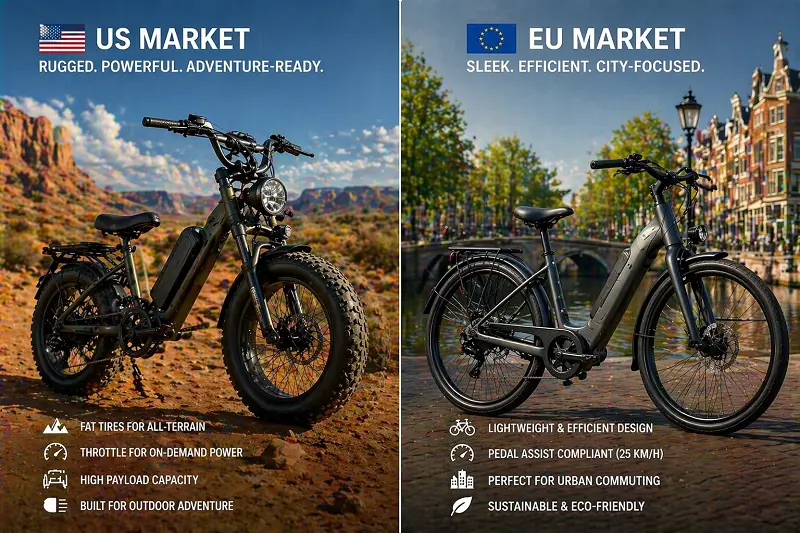
The technical requirements stemming from these legal and cultural differences are huge. As a manufacturer with our own frame factory and assembly lines, we have to create separate production workflows to meet these distinct needs.
Designing for the US Market
In the US, the popularity of throttle-equipped Class 2 and Class 3 e-bikes means we design for power. This often involves building more robust frames to handle the stress of a 750W motor and the instant torque from a throttle. Battery capacity is also a consideration, as using a throttle heavily can drain the battery faster than gentle pedal assistance. Models like fat-tire e-bikes and cargo e-bikes with powerful hub motors and throttles are extremely popular. They cater to the American desire for all-terrain capability, utility, and a riding experience that borders on a light motorcycle.
Engineering for the European Market
For Europe, our engineering focus shifts to perfecting the PAS. The goal is to make the motor's assistance feel completely natural and intuitive. This involves using advanced torque sensors that measure the rider's pedaling force and deliver a proportional amount of power. The smoother the integration, the better the bike. We also prioritize efficiency and lightweight design. Since riders are always pedaling, they want a bike that feels agile and has a long range. This leads to sleeker city e-bikes and trekking models optimized for battery life and a seamless cycling experience.
Conclusion
The preference for throttles in the US versus pedal-assist in the EU is a clear result of different laws, riding cultures, and consumer expectations, shaping how we design e-bikes.
Learning about Pedelecs explains why pedal-assist systems dominate the European e-bike market. ↩
Understanding PAS can help you decide if this system aligns with your cycling goals and preferences. ↩
Knowing about Class 2 e-bikes helps you understand their unique features like throttles and higher motor power. ↩