Struggling to spec the right e-bike motor for hilly markets? Focusing only on high wattage can lead to poor performance and unhappy customers. Let's build a truly capable hill-climber together.
To choose the right e-bike motor for hilly cities, focus on the entire system, not just peak power. Prioritize high torque for climbing1, select between a mid-drive or a geared hub motor, and ensure the drivetrain is robust enough for frequent stops and starts under load.
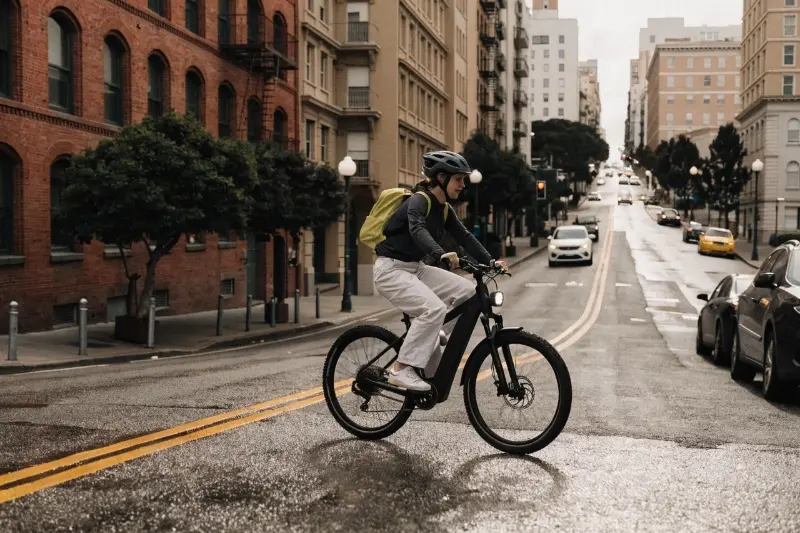
I've been in this industry for over two decades, and I've seen brands make the same mistakes time and again. They get fixated on a single number on a spec sheet. But building an e-bike that truly conquers a city like San Francisco requires a deeper look. It's about how all the parts work together. From our factory floor, the conversation isn't about the "best motor," it's about building the right system for the job. Let's break down what B2B buyers really need to consider.
Mid-Drive or Hub Motor: Which is Better for Steep Hills?
Can't decide between a mid-drive and a hub motor for your hill-climbing e-bike? Choosing the wrong one can cripple performance, no matter how powerful it seems on paper. This is a common challenge.
For steep, sustained climbs, a mid-drive motor is generally superior because it leverages the bike's gears for optimal torque and efficiency. However, a powerful geared hub motor can be a cost-effective and low-maintenance choice for moderate hills and urban stop-and-go traffic, offering simplicity and direct power.
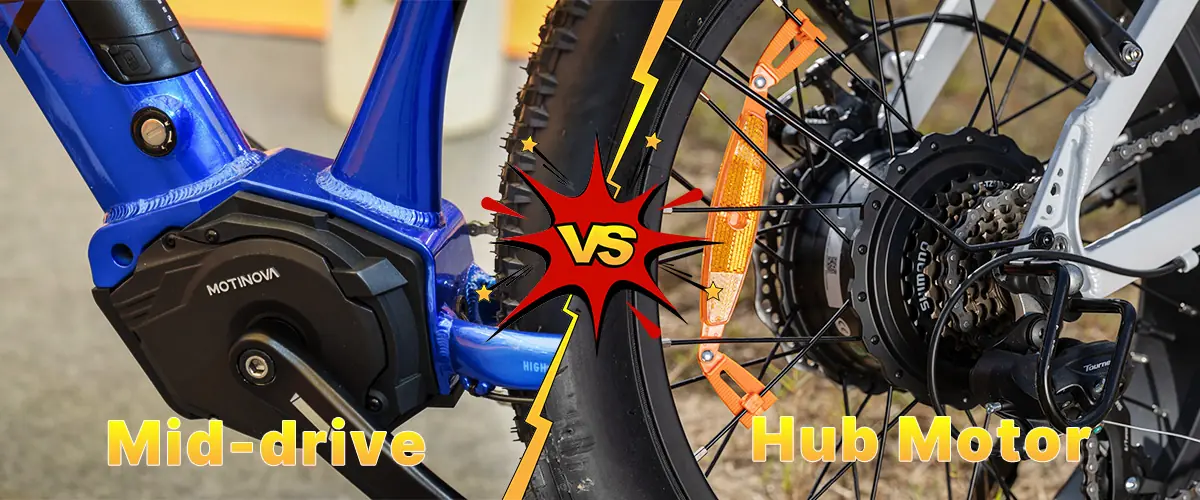
When we consult with clients on a new e-bike line, the motor type is one of the first technical decisions. A mid-drive motor is mounted at the bike's crankset, and it drives the chain. This means the motor's power goes through the bike's own gears. This is a huge advantage on hills. It allows the motor to spin at its most efficient speed, just like a car shifting into a lower gear to climb a steep road. This results in better torque at low speeds and a more natural riding feel. On the other hand, a hub motor is located in the center of the front or rear wheel. Geared hub motors are compact and contain internal gears to increase torque, making them great for acceleration. They are simpler, put less stress on the bike's chain, and often require less maintenance. This makes them a solid choice for delivery fleets where uptime is critical.
| Feature | Mid-Drive Motor | Geared Hub Motor |
|---|---|---|
| Climbing Efficiency | Excellent, uses bike's gears for optimal RPM | Good, but can struggle on very steep, slow climbs |
| Weight Distribution | Central and low, better balance | Concentrated in one wheel, can feel unbalanced |
| Drivetrain Wear | Higher wear on chain and cassette | Minimal wear on chain and cassette |
| Maintenance | More complex, specialized service may be needed | Simpler, easier to service or replace |
| Cost | Generally higher | More cost-effective |
Why is Torque More Important Than Watts for Climbing?
Are you still marketing your e-bikes based on high wattage? This common mistake can mislead your customers and result in bikes that feel weak when they need power the most. It's a spec that doesn't tell the whole story.
Torque, measured in Newton-meters (Nm)2, represents the rotational force that gets you moving from a standstill and powers you up a hill. High wattage might mean a high top speed on a flat road, but high torque is what delivers the actual climbing power your customers feel.
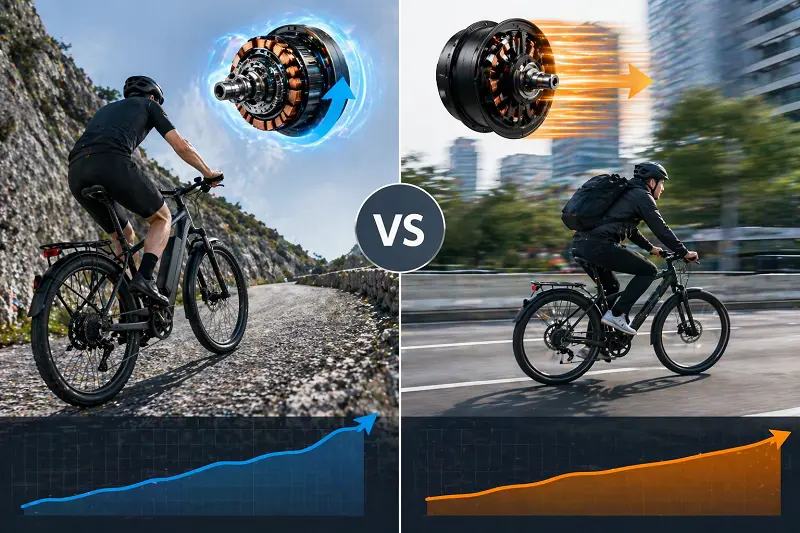
In the factory, we look at torque as the true measure of a motor's muscle. Think of it this way: wattage is how fast the motor can work, but torque is how much work it can do. When you're at the bottom of a steep hill, you need a strong push to get going and keep moving. That push is torque. A motor with high torque will feel powerful and responsive right from the first pedal stroke, making it easy to start on an incline, even with a heavy load. For a general-purpose city e-bike, 50-60 Nm is adequate. But for a market with serious hills, or for cargo applications, we always recommend specifying a motor with 80 Nm or more. This ensures the bike doesn't just climb, but does so with confidence. It's the difference between a bike that struggles and one that feels effortlessly capable. For a premium product, pairing a high-torque motor with a torque sensor (instead of a simple cadence sensor) provides the most intuitive and smooth power delivery.
How Does the Drivetrain Affect Hill-Climbing Performance?
You've picked a powerful motor, but your e-bike still struggles on hills. The problem might not be the motor at all. It could be a mismatched or inadequate drivetrain that is wasting the motor's power.
A proper drivetrain is crucial for hill climbing, especially with a mid-drive motor. It acts like a car's transmission, allowing the motor to operate in its most efficient RPM range. A wide gear range and durable components are essential for tackling steep inclines and handling high motor torque.
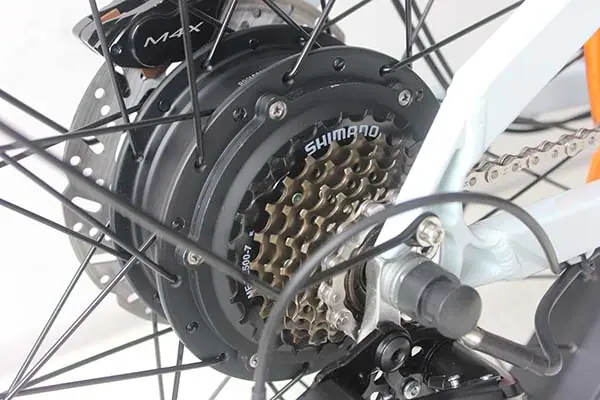
We can't just bolt a powerful motor onto any bike and expect it to work. The whole system has to be engineered to work together. A mid-drive motor's power is multiplied by the bike's gears, so the gear range is critical. For hilly terrain, we need a cassette with a very large cog, often 42 teeth or even 50 teeth. This provides a low "granny gear" that makes it easy to spin the pedals and let the motor work efficiently on the steepest climbs. Furthermore, the high torque from these motors puts immense strain on the drivetrain components. Using a standard bicycle chain or cassette on a high-torque e-bike is a recipe for failure. We must use e-bike-specific components that are designed to handle the extra force. For some applications, like rental or delivery fleets, an Internal Gear Hub (IGH)3 can be a great solution. It protects the gears from the elements and reduces maintenance, though it may offer a slightly smaller gear range.
| Drivetrain Type | Best Use Case | Pros | Cons |
|---|---|---|---|
| Standard Derailleur | Performance-focused bikes, mountain e-bikes | Wide gear range, lightweight, efficient | Higher maintenance, exposed to damage |
| Internal Gear Hub | Commuting, delivery, and fleet bikes | Low maintenance, durable, can shift at a stop | Heavier, more expensive, smaller gear range |
| Single Speed | Flat terrain only | Simple, very low maintenance | Not suitable for hills at all |
How Do You Define the Powertrain for Different Load Scenarios?
Are you using the same motor setup for a lightweight commuter and a heavy-duty delivery e-bike? This one-size-fits-all approach fails to meet specific user needs and can lead to system failure and unhappy customers.
The powertrain must be defined by the specific load scenario. A daily commuter needs a balanced system for efficiency and responsiveness. A cargo or delivery e-bike, however, requires maximum torque, a heavy-duty frame and drivetrain, and a larger battery to handle the constant stress of heavy loads.
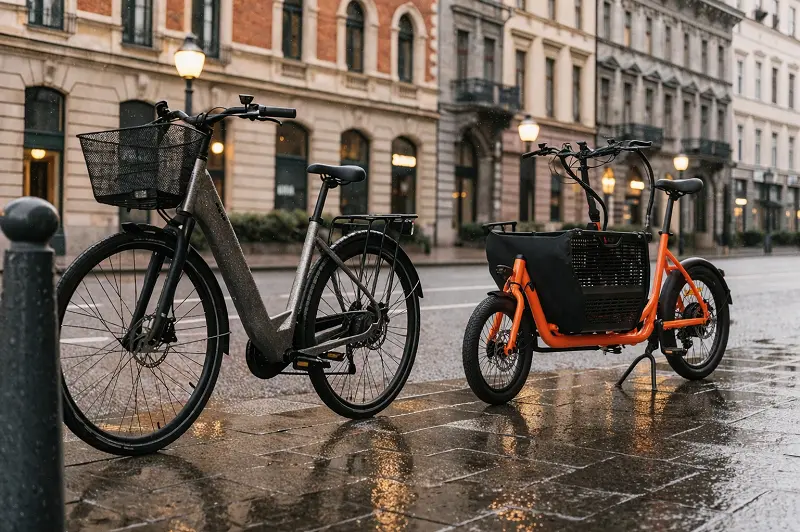
When a client approaches us for a new OEM project, one of the first questions we ask is: "Who is riding this, and what are they carrying?" The answer changes everything. Let's compare two common scenarios for a hilly city. First, the daily commuter. They carry a backpack and maybe a laptop, so the total load is relatively light. For them, a balanced system with a 60-80 Nm motor, whether mid-drive or a strong geared hub, provides a great mix of climbing power and battery efficiency. Now, consider a food delivery rider. They carry a heavy, insulated bag, and their total load can be 30kg or more over their own body weight. They need a workhorse. For this scenario, we specify a system built for maximum durability and power. This means a motor with over 85 Nm of torque, an extra-strong frame, robust wheels, and powerful brakes. We also recommend a much larger battery, over 700Wh, to ensure they can complete a full shift without running out of power. The choice of motor might even lean towards a heavy-duty hub motor to reduce chain wear and maintenance downtime, which is critical for a commercial business.
Conclusion
Building a great e-bike for hilly cities isn't about one magic motor. It's about a thoughtfully engineered system where torque, motor type, and gearing are all matched to the rider's needs.
Understanding the importance of high torque can help you choose an e-bike that performs well on hills, ensuring a smooth and powerful ride. ↩
Understanding torque's role in e-bike performance can help you select a motor that provides the necessary power for hill climbing. ↩
Explore the benefits of an Internal Gear Hub, offering low maintenance and durability, ideal for urban and fleet use. ↩