Struggling to select the right battery for your e-bike line? This decision directly impacts your costs, performance, and brand reputation, making it a critical step for your business's success.
The best electric bike battery depends entirely on your target market. For performance-focused e-bikes like mountain or cargo models, a high-capacity (12-20Ah) and high-voltage (48V) lithium-ion battery is ideal. For cost-effective city commuters, a lighter 36V, 8-12Ah lithium-ion battery works best.
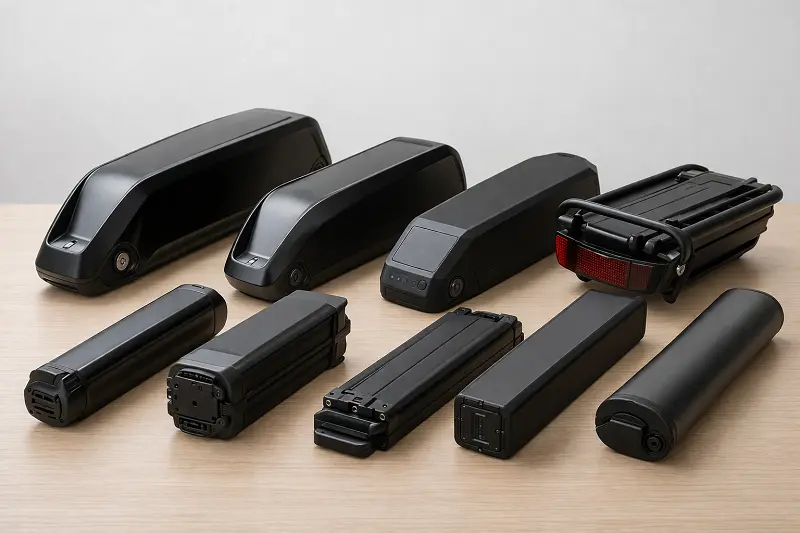
As an e-bike manufacturer with over two decades of experience, I've seen countless brands succeed or fail based on one component: the battery. It's the heart of the e-bike, and getting it right is non-negotiable for long-term profitability and customer satisfaction. In this post, I’ll walk you through everything you need to know from a manufacturer's perspective to make the most informed decision for your business.
Why is the battery the most critical component for your e-bike business?
Thinking battery details are a minor point? This oversight can inflate your costs by up to 50% and lead to high return rates, destroying your profit margins and brand image.
The battery is crucial because it can account for 30-50% of an e-bike's total cost. It dictates the bike's range and power, and its lifespan directly impacts long-term maintenance expenses, customer satisfaction, and your overall profitability.
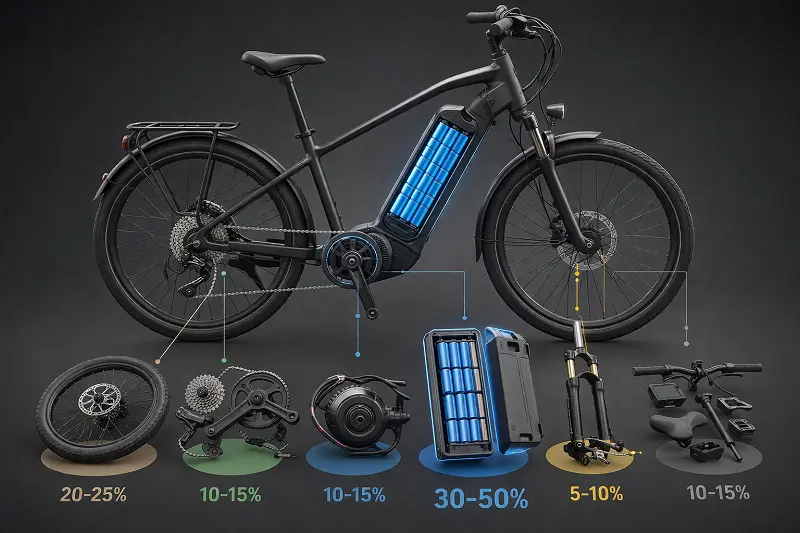
When we work with our OEM/ODM partners, the conversation always starts with the battery. It’s the single most expensive component and has the biggest influence on how the end customer perceives the quality and value of your product. A poorly chosen battery can lead to a product that doesn't meet market expectations, resulting in negative reviews and costly warranty claims. On the other hand, a well-chosen battery that is perfectly matched to its intended use case becomes a powerful selling point. Let's break down why this component deserves so much of your attention.
How It Impacts Your Bottom Line
The battery isn't just a part; it's a major financial decision. It often makes up between 30% and 50% of the total manufacturing cost of an e-bike. For a B2B buyer, this means your choice directly affects your unit cost and pricing strategy1. A high-capacity battery will increase the initial investment per bike, but it also allows you to target premium markets where customers are willing to pay more for longer range and better performance. The key is to find the right balance. Over-configuring a bike with a battery that's too powerful for its intended market (like a massive battery on a simple city bike) leads to unnecessary costs, while under-configuring it will lead to customer dissatisfaction and damage your brand.
Lifespan and Long-Term Costs
An e-bike battery's lifespan is typically rated for 500 to 1,000 charge cycles. However, this can be drastically shortened by improper use, such as overcharging, deep discharging, or storage in extreme temperatures. For your business, a short battery life means more frequent replacements, higher after-sales support costs, and unhappy customers. This is why we always integrate a high-quality Battery Management System (BMS)2 into our battery packs. A good BMS protects the battery from conditions that shorten its life, providing a more reliable product for your customers and reducing your long-term operational headaches.
Matching the Battery to Your Market
There is no "one-size-fits-all" battery. The ideal battery configuration is entirely dependent on the market you are targeting.
| Market Segment | Primary Need | Why it Matters for Your Business |
|---|---|---|
| Urban Commuting | Lightweight & Efficient | Customers want a bike that is easy to carry and maneuver. A smaller, lighter battery keeps costs down and meets daily commuting needs without overkill. |
| Mountain / Off-Road | High Power & Durability | Riders need strong motor assistance for steep climbs and rugged terrain. A powerful, durable battery is a key feature that justifies a higher price point. |
| Cargo / Delivery | Long Range & Reliability | These bikes run all day under heavy loads. A large-capacity, robust battery is essential for operational efficiency and is a primary purchasing factor for fleet buyers. |
How do battery capacity and type affect performance and cost?
You see specs like 36V, 48V, and 10Ah, but they just look like numbers. Choosing the wrong combination can leave your e-bikes underpowered, with a disappointing range and negative reviews.
Battery capacity, measured in Amp-hours (Ah), determines the e-bike's range—more Ah means longer distance. Voltage (V) dictates power output; higher voltage is better for climbing and heavy loads. Together, they directly influence both performance and cost.
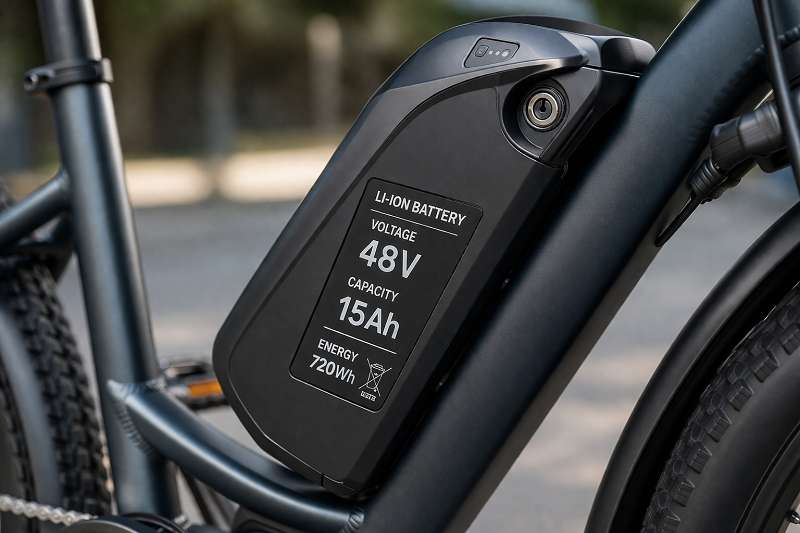
Understanding these two fundamental metrics is the first step to designing a successful e-bike. Think of it this way: voltage is the force pushing the electricity, while capacity is the amount of electricity available. A higher voltage allows the motor to deliver more power, which is felt as stronger acceleration and better hill-climbing ability. Higher capacity means the battery holds more energy, allowing the rider to travel farther on a single charge. As a manufacturer, we help our partners navigate these specifications to build a product that perfectly aligns with their brand promise and market expectations.
Understanding Voltage (V)3 and Capacity (Ah)4
Let's get a bit more technical. The total energy in a battery is measured in Watt-hours (Wh), which you can calculate by multiplying voltage and amp-hours (V x Ah = Wh). This number gives you the most accurate picture of the battery's total energy reserve.
-
Voltage (V): This determines the power potential of your e-bike. A higher voltage system can deliver power to the motor more efficiently, which is especially important for high-performance applications.
- 36V: This is the standard for many city and commuter e-bikes. It provides a good balance of power, weight, and cost for everyday use and relatively flat terrain.
- 48V: This is common in mountain e-bikes, cargo bikes, and fat-tire models. The extra power is noticeable when climbing steep hills, accelerating quickly, or carrying heavy loads.
-
Capacity (Ah): This is all about range. The higher the Ah rating, the longer your customer can ride before needing to recharge. For a delivery business, high capacity is a must-have for all-day operation. For a casual city rider, a smaller, lighter, and more affordable battery may be perfectly adequate.
Common Battery Chemistries
The materials inside the battery also play a huge role in its performance, weight, lifespan, and cost. While other technologies exist, the market is dominated by two main types.
| Battery Type | Advantages | Disadvantages | Best For |
|---|---|---|---|
| Lithium-ion (Li-ion) | High energy density (more power, less weight), long lifespan (500-1000+ cycles), low self-discharge, fast charging. | Higher initial cost. | Premium markets: mountain, cargo, city commuters, and any application where performance and low weight are priorities. |
| Lead-acid | Very low cost, mature technology. | Very heavy, short lifespan (200-400 cycles), poor energy density, requires regular maintenance. | Entry-level, budget-sensitive markets where cost is the absolute primary driver and performance is secondary. |
A quick note on Solid-State Batteries5: You may hear about this emerging technology. It promises higher energy density, better safety, and an even longer lifespan. However, it is still in the development phase and is not yet commercially viable for mass production due to extremely high costs. It's one to watch for the future, but for now, lithium-ion remains the gold standard for quality e-bikes.
Which battery configuration is best for your target market?
You want to launch a successful e-bike line but are unsure which specs to choose. A one-size-fits-all approach will fail, leaving your products either too expensive or underperforming for your customers.
For city commuting, a lightweight 36V, 8-12Ah lithium-ion battery is ideal. For demanding mountain or cargo use, a powerful 48V, 12-20Ah+ battery is necessary. Matching the battery configuration to the specific use case is essential for success.
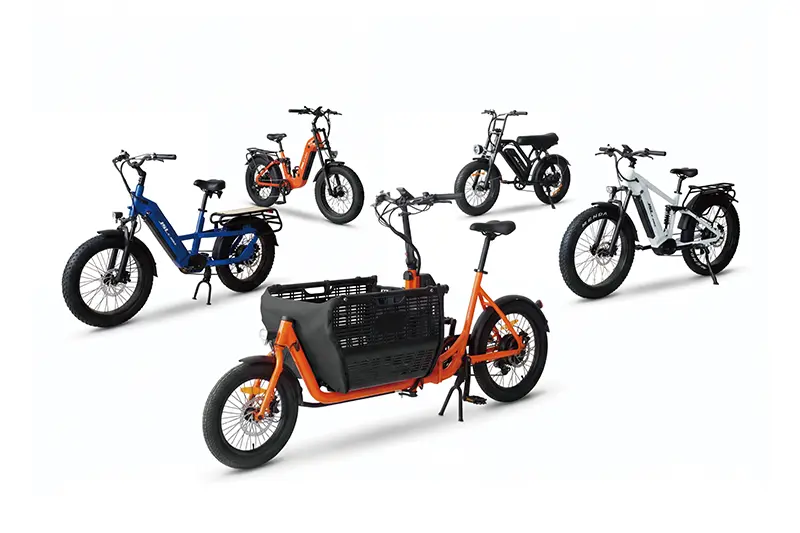
As an OEM/ODM partner, our job is to help you build a product line that wins in your specific market segment. We don't just assemble parts; we provide the strategic insight to ensure every component choice serves a purpose. The battery is the perfect example of this. A delivery company in a hilly city has completely different needs than a student riding across a flat campus. By tailoring the battery, we can optimize the bike for its environment and give you a competitive edge. Here are our expert recommendations based on the most common e-bike markets.
For the Urban Commuting Market
The urban rider values convenience, portability, and efficiency. They need a bike that is light enough to carry up a flight of stairs and has enough range for their daily commute to work or school, with a little extra for errands. Performance is secondary to practicality.
- Primary Needs: Lightweight, cost-effective, sufficient range for daily trips (15-30 miles / 25-50 km).
- Recommended Configuration:
- Voltage: 36V
- Capacity: 8Ah - 12Ah
- Battery Type: Lithium-ion
- Why: This setup provides a great balance of performance, weight, and cost. A 36V system is more than enough power for city streets, and a 10Ah battery offers ample range for most commutes without adding excessive weight or cost.
For the Mountain and Off-Road Market
This market demands power, durability, and a long-range. Riders are tackling steep inclines, rough trails, and long distances away from charging points. The battery must be robust and capable of delivering sustained high power to the motor without overheating or fading.
- Primary Needs: High power for climbing, long-range for extended rides, durable construction.
- Recommended Configuration:
- Voltage: 48V
- Capacity: 12Ah - 20Ah+
- Battery Type: Lithium-ion (using high-quality cells)
- Why: A 48V system delivers the torque needed to conquer steep hills. A high capacity of 15Ah or more ensures riders won't run out of juice halfway through a trail. Durability and a strong BMS are critical here.
For the Delivery and Cargo Market
For businesses using e-bikes for logistics, the bike is a tool. The most important metrics are reliability, operational range, and load-carrying capacity. The battery must be a workhorse, capable of lasting an entire shift under a heavy load, day in and day out.
- Primary Needs: Maximum range, high load capacity, extreme reliability, and fast charging.
- Recommended Configuration:
- Voltage: 48V or higher
- Capacity: 15Ah - 20Ah or even dual-battery systems
- Battery Type: High-quality Lithium-ion
- Why: A 48V system handles heavy cargo with ease. The largest possible capacity minimizes downtime for charging. For fleet operators, battery longevity and low maintenance are key to profitability, making a top-tier battery and BMS a wise investment.
How can you reduce battery failures6 and extend their lifespan?
Battery failures are a huge headache for any e-bike brand. They lead to costly warranty claims, damage your reputation, and create logistical nightmares for your distribution network and customers.
To minimize failures, partner with a high-quality battery supplier and ensure every e-bike includes a robust Battery Management System (BMS). This prevents overcharging and deep discharging, dramatically extending the battery's life and reducing your after-sales costs.
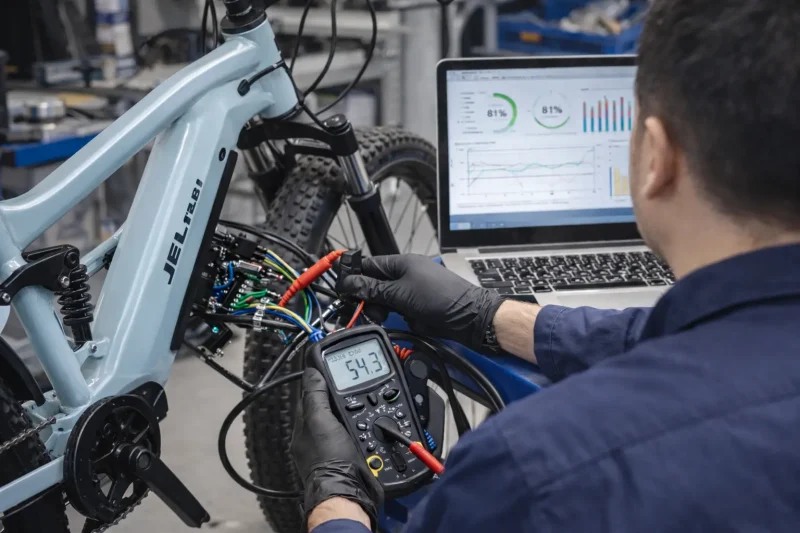
At our factory, quality control for batteries is one of our most rigorous processes. We understand that a single faulty battery can tarnish a brand's reputation. Preventing problems before they happen is far more cost-effective than dealing with them after the sale. Protecting your investment and your brand's good name comes down to a few key strategies that we implement with all our partners. It's about building a reliable product from the ground up, not just hoping for the best. Here are the most effective ways to ensure your batteries are safe, reliable, and long-lasting.
Choose a High-Quality Battery Supplier
This is the most important step. The source of your battery cells and the quality of the pack assembly are paramount. A cheaper supplier might save you money upfront, but it will cost you far more in the long run through returns, warranty replacements, and reputational damage. We vet our suppliers based on strict criteria, including cell consistency, manufacturing standards, and certifications like CE, TÜV, and UL. A reputable supplier provides stable, predictable performance, which means fewer surprises for you and your customers. Never compromise on battery quality; it's the foundation of your product.
Insist on a Robust Battery Management System (BMS)
The BMS is the brain of the battery pack. It’s a small circuit board that constantly monitors the health of the battery and protects it from damage. A good BMS will:
- Prevent Overcharging: Stops charging when the battery is full.
- Prevent Over-Discharging: Cuts power before the battery is drained to a damagingly low level.
- Balance Cells: Ensures all the individual cells in the pack are charged and discharged evenly, maximizing lifespan.
- Monitor Temperature: Shuts the battery down if it gets too hot or too cold. A quality BMS is your best insurance policy against premature battery failure and is a critical safety feature.
Educate on Proper Maintenance and Care
Finally, empowering your customers with knowledge is a simple but effective way to extend battery life. As part of our OEM service, we help you create clear and simple user manuals that outline best practices. These should always include key tips:
- **Stor
Understand the impact of battery selection on the financial aspects of e-bike manufacturing and market positioning. ↩
Find out how a BMS protects e-bike batteries and extends their lifespan, ensuring reliability and safety. ↩
Understanding voltage helps you choose the right battery for your e-bike, impacting power and performance. Explore this link for detailed insights. ↩
Understanding battery capacity helps you choose the right e-bike for your needs, ensuring optimal range and performance for your specific use case. ↩
Investigate the emerging technology of solid-state batteries and their potential impact on e-bike performance. ↩
Find strategies to minimize battery failures, ensuring reliability and customer satisfaction in e-bikes. ↩