Struggling with rising fuel costs and city congestion for your deliveries? You're not alone. The solution might be smaller, smarter, and electric, but is the market ready for a big shift?
Yes, the electric cargo bike market is becoming a key part of modern logistics. It's expected to grow from $2.25 billion in 2026 to $2.65 billion by 2031. This steady growth shows a clear shift from a niche product to essential commercial infrastructure.
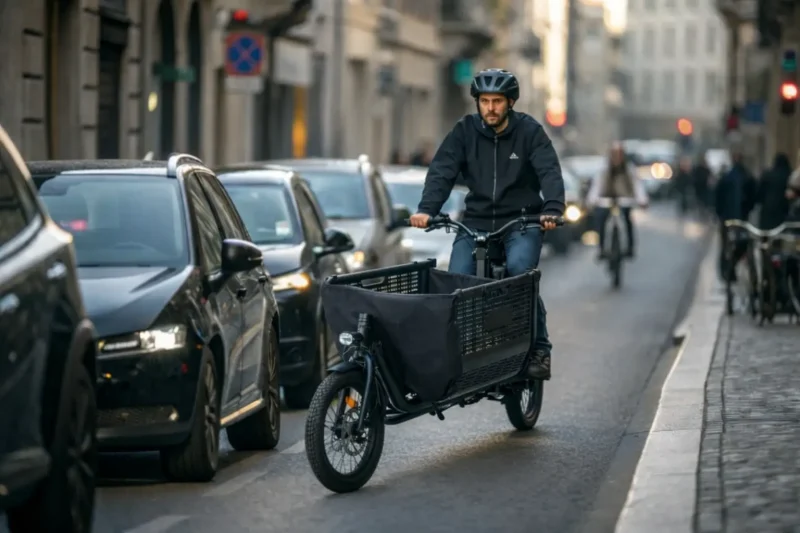
As an e-bike manufacturer for over two decades, I've seen many trends come and go. But the rise of the electric cargo bike feels different. It's not just a fad; it's a practical response to real-world problems. Businesses, from small cafes to huge logistics companies, are looking for ways to deliver goods faster and cheaper in crowded cities. We're getting more inquiries than ever for custom cargo e-bike solutions. In this article, I want to break down the numbers and share what we're seeing on the ground. Let's look at what's driving this market, the challenges it faces, and where the biggest opportunities are for businesses like yours.
What's Fuelling the Growth of Electric Cargo Bikes?
Are you wondering why so many delivery companies are suddenly switching to e-bikes? It’s not just about being green. There are powerful financial and logistical reasons driving this major shift.
This growth is driven by the expansion of last-mile delivery services, government incentives, and falling battery prices. As cities get more crowded, e-cargo bikes offer a faster, cheaper way to deliver goods, avoiding traffic jams and emission zone fees that affect traditional delivery vans.
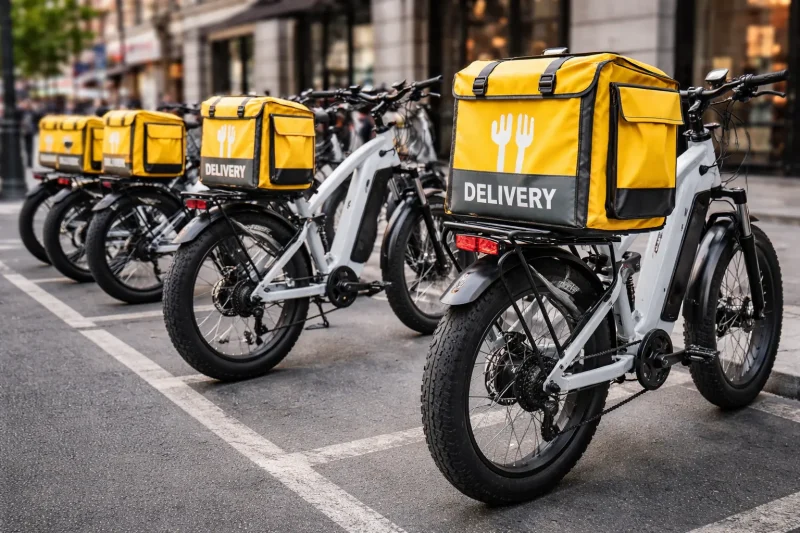
In my conversations with fleet managers, the story is always the same. A client from North America told me their delivery vans were constantly getting stuck in downtown traffic, leading to delays and parking fines. After they tested a small fleet of our cargo e-bikes, they found delivery times in the city center were cut by almost half. This isn't just about speed. It's also about access. Many European cities now have low-emission zones1 where diesel vans are banned or heavily taxed. An electric cargo bike bypasses these restrictions completely.
Here's a breakdown of the key drivers we're seeing:
Key Market Growth Drivers
| Driver | Impact | Why It Matters |
|---|---|---|
| Last-Mile Delivery | High | E-cargo bikes are faster than vans in dense urban areas, reducing delays and operational costs like parking fines. |
| Government Incentives | Medium-High | Tax credits and subsidies, especially in Europe and North America, lower the initial purchase price and shorten the payback period for fleets. |
| Falling Battery Costs | Medium | Cheaper, more energy-dense lithium-ion batteries make the total cost of ownership for e-cargo bikes more competitive than ever. |
| Better Infrastructure | Medium | Cities are building more protected bike lanes2, which makes riding safer and routes more predictable for delivery operators. |
These factors create a powerful case for switching. It's a practical business decision that also happens to be good for the environment.
What Challenges Could Slow Down the Market?
Thinking about investing in an e-cargo bike fleet? It's a smart move, but you should also be aware of the potential hurdles that could impact your return on investment.
The main challenges are the high upfront cost compared to non-electric bikes and the limited payload capacity compared to vans. These factors can make it difficult for smaller businesses to invest and may require larger companies to operate mixed fleets for different delivery needs.
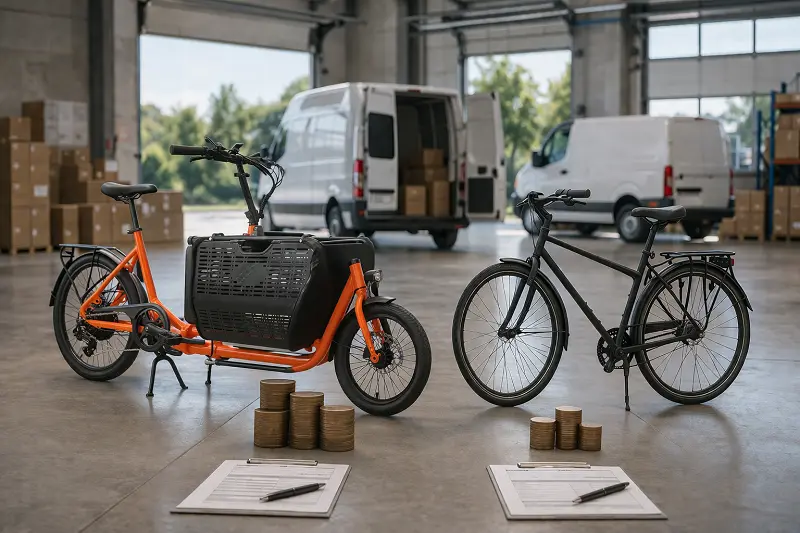
While the long-term savings are clear, the initial price tag can be a barrier. A small business owner I spoke with loved the idea of an electric cargo bike but struggled to justify the capital expense without financing options. This is a common problem, especially in emerging markets. The other major point we discuss with clients is payload. A typical e-cargo bike can carry 100-200 kg. That's perfect for most packages and food deliveries. But it can't replace a van that needs to deliver a washing machine or bulk furniture. This means companies often need to keep some traditional vehicles, which adds complexity to their operations. As manufacturers, we're constantly working on stronger frames and more efficient systems, but these physical limits are a real consideration for fleet managers planning their logistics.
Pedal-Assist or Throttle: Which System Dominates the Market?
Choosing a drive system seems technical, but it has huge legal and practical implications. Are you choosing the system that gives your fleet the most access and efficiency?
Pedal-assist systems are the clear market leader, holding a massive 86.62% market share. This is because they comply with regulations in key markets like Europe, which allows for higher power output as long as the rider is pedaling, avoiding stricter licensing requirements.
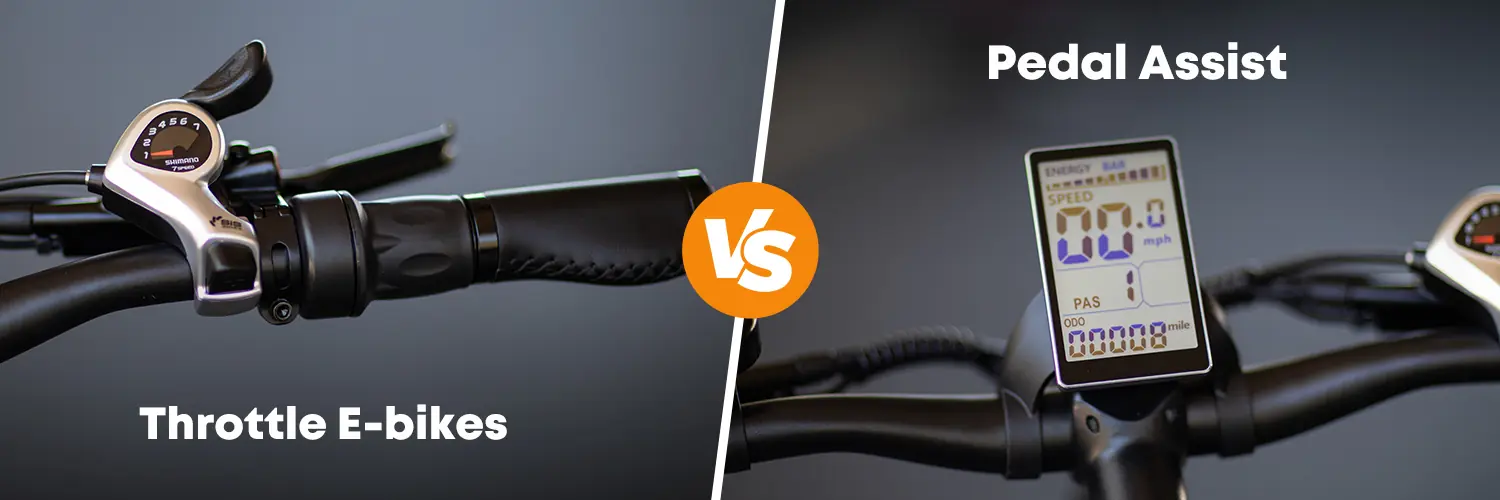
From our manufacturing perspective, the demand for pedal-assist is overwhelming. The reason is simple: it keeps the vehicle classified as a bicycle. This means operators can use bike lanes, avoid registration costs, and benefit from lower insurance premiums. Modern torque sensors3 have gotten incredibly sophisticated. They measure how hard the rider is pedaling and provide a smooth, natural-feeling power boost that matches the effort. This not only makes for a better riding experience but also optimizes battery use, extending the bike's range. While throttle-on-demand systems are gaining some ground in North America where regulations are more relaxed, they often face restrictions in the dense European cities where cargo bikes are most effective. For any business looking to build a scalable, legally compliant fleet, pedal-assist is the default choice.
Mid-Drive vs. Hub Motors: What Do Commercial Fleets Prefer?
Does the motor's location on a cargo e-bike really make a difference? For a business, choosing the wrong one can lead to poor performance, frequent maintenance, and costly downtime.
Commercial fleets overwhelmingly prefer mid-drive motors, which will hold a 54.88% market share in 2025. Their ability to leverage the bike's gears provides superior torque for climbing hills and handling heavy loads, making them the most reliable choice for demanding delivery routes.
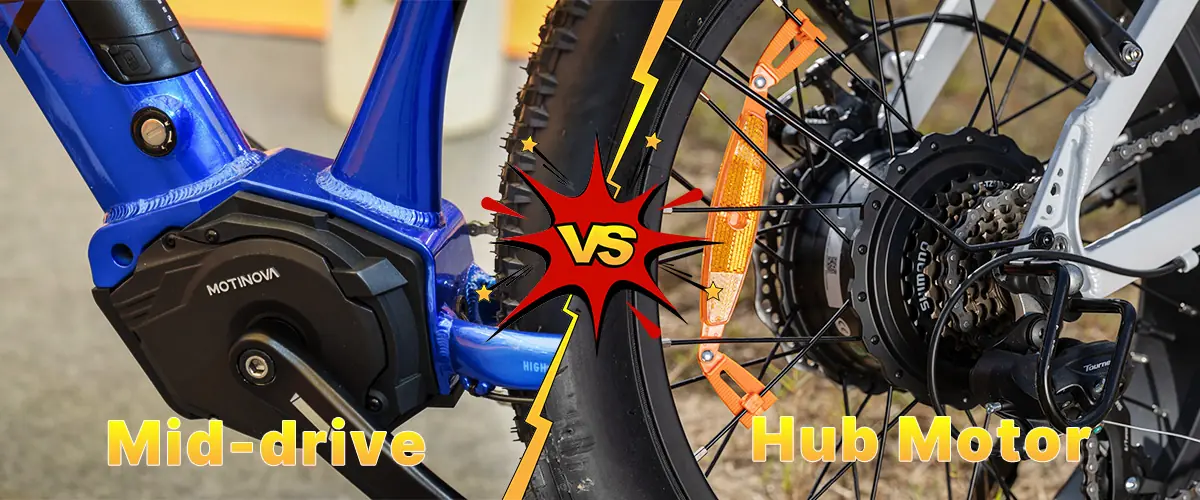
When we work with clients on an OEM project for a new cargo e-bike, the motor is one of the first things we discuss. The data shows mid-drives are the winner for commercial use, and our experience confirms it. A mid-drive motor powers the crank, so it uses the bike's own gears to multiply its force. This is a game-changer when you have a 150 kg load and need to start on a steep hill. The bike can stay in a low gear and climb easily. Hub motors, which are located in the wheel's hub, are simpler and can be great for flat terrain. But under the constant strain of heavy loads and hills, they can struggle and overheat. The central placement of a mid-drive motor also creates a lower, more balanced center of gravity, which makes the bike safer and easier to handle in traffic. That performance and safety advantage is why businesses are willing to invest in them.
Who Are the Biggest Buyers of Electric Cargo Bikes Today?
You see them on the streets, but who exactly is investing in these vehicles? Understanding the end-user is key to seeing where the market is headed and where the opportunities lie.
Commercial delivery fleets are the largest segment, making up 58.41% of the market in 2025. This is dominated by package and food delivery companies that use e-cargo bikes to make faster, more efficient stops in dense urban areas, avoiding traffic and parking issues.
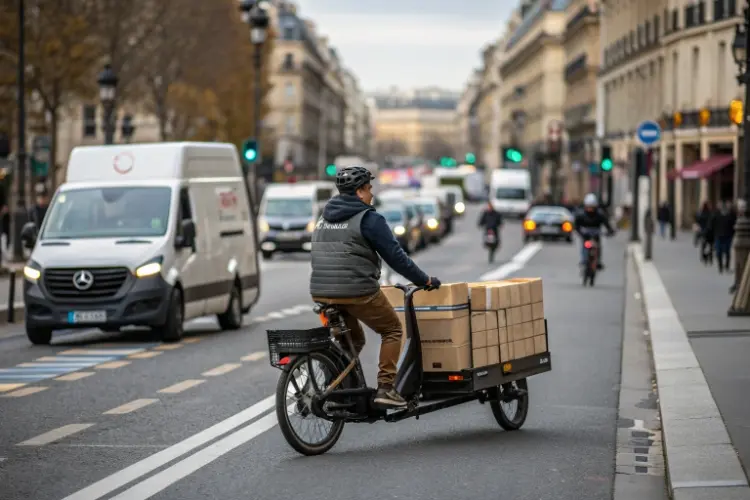
The fastest-growing group, however, is service providers. Think of utility companies, telecom maintenance crews, and facilities management. We're seeing a huge increase in inquiries from these types of businesses. They need to carry tools and equipment, not just packages. For them, the benefits are clear. A technician can ride right up to a building, park on the sidewalk without a permit, and work without the noise of a running van engine. We've even helped design custom frames with specialized tool racks and onboard power inverters to turn the e-bike into a mobile workstation4. This segment is projected to grow at a rate of 5.51% annually. It shows that the use case for cargo e-bikes is expanding far beyond just last-mile package delivery into mobile services of all kinds.
Which Regions Are Leading the Electric Cargo Bike Revolution?
Where in the world is this trend taking off the fastest? Knowing the key geographical markets can help you understand global supply chains and identify the biggest growth opportunities for your business.
The Asia-Pacific region5 is the largest market, accounting for 47.55% of revenue. This is driven by China's massive manufacturing ecosystem and Japan's supportive regulations. However, North America is the fastest-growing region, with a projected annual growth rate of 6.95% through 2031.
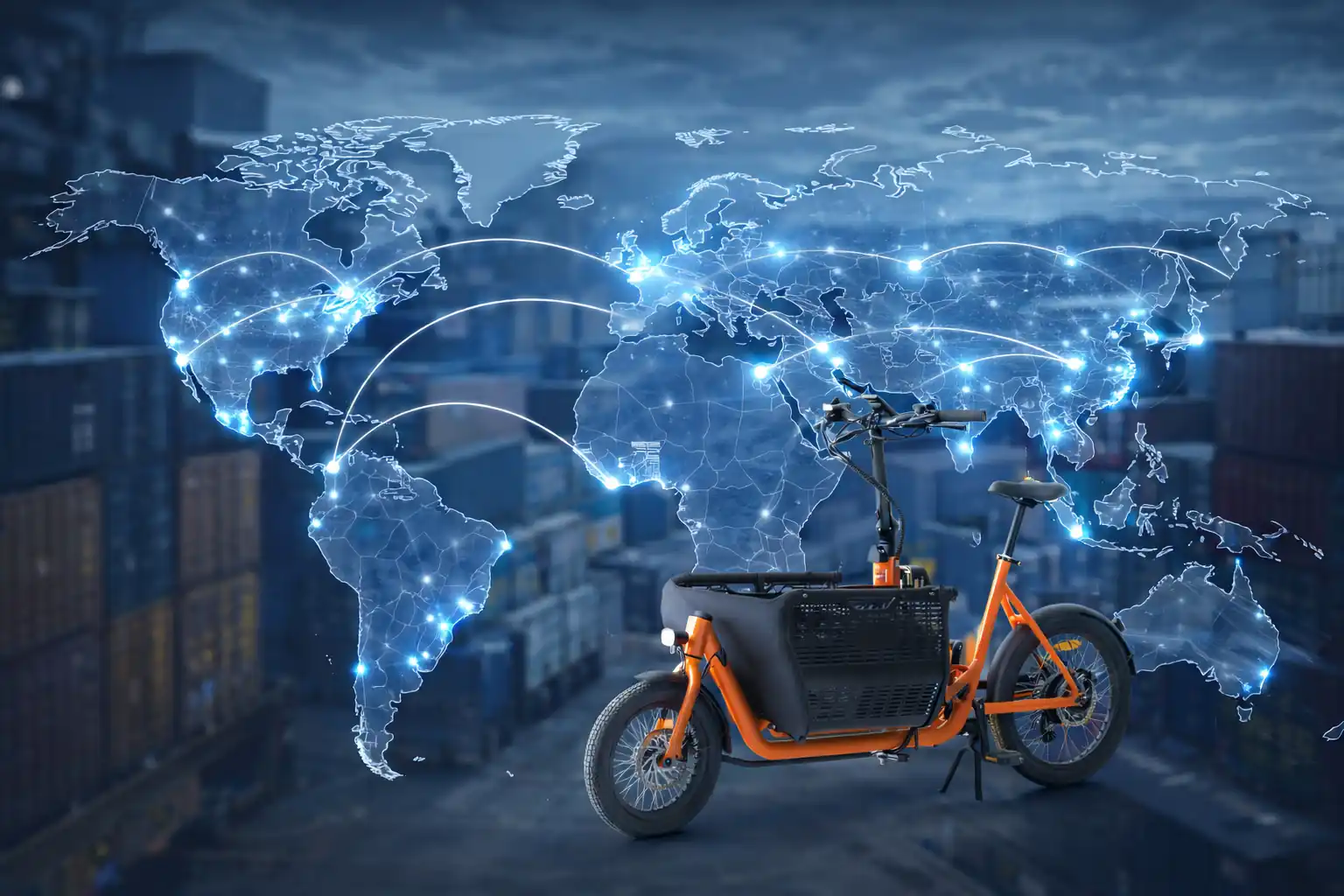
As a manufacturer based in China, we have a front-row seat to the dominance of the Asia-Pacific market. The ability to integrate battery, motor, and frame production in one place gives us a huge cost and speed advantage. This has made the region both a production powerhouse and a major consumer. But the excitement I hear from my partners in North America is impossible to ignore. A combination of federal tax credits, cities investing heavily in bike lanes, and consumer demand for same-day delivery is creating a perfect storm for growth. Major logistics players like UPS and FedEx are publicly committing to reducing emissions, and switching to e-cargo bikes in city centers is a visible and effective way for them to do it. While Europe remains a mature and stable market thanks to clear regulations, the explosive growth potential is currently in North America.
Conclusion
The electric cargo bike market is no longer a niche. It is a solid, growing industry becoming essential for modern urban logistics, driven by real economic and environmental needs.
Find out how e-cargo bikes bypass restrictions in low-emission zones. ↩
Find out how infrastructure improvements are supporting e-cargo bike adoption. ↩
Discover how advanced sensors improve riding experience and battery efficiency. ↩
Explore innovative uses of e-cargo bikes for service providers and technicians. ↩
Understand the factors driving the dominance of the Asia-Pacific market. ↩