Your business is feeling the pressure of rising delivery costs and tough environmental rules1. Vans get stuck in traffic and face fines, making urban logistics a daily struggle.
The global electric cargo bike market is a stable, growing infrastructure market, projected to reach $26.5 billion by 2031. It has shifted from a niche product to a core urban logistics solution, driven by the need for efficiency, regulatory compliance, and significant cost savings for businesses.
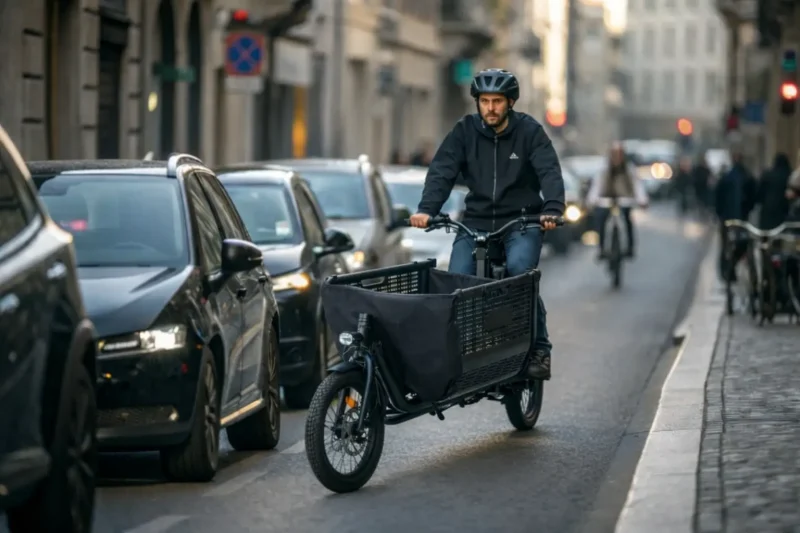
This market isn't just about selling another type of bicycle anymore. It has fundamentally changed. We're now talking about a key piece of city infrastructure. To really grasp this opportunity, we need to look at what's driving this growth and what it means for your business. Let's break down the details so you can make the right decisions.
What's Driving the Demand for Cargo E-Bikes?
Are your delivery costs soaring because of city traffic and new regulations? Last-mile logistics are getting harder. Electric cargo bikes offer a proven solution that cuts through the chaos.
The demand is mainly driven by three things: the need for efficient last-mile delivery in dense cities, government incentives that favor e-bikes, and a lower total cost of ownership thanks to cheaper batteries and better technology.
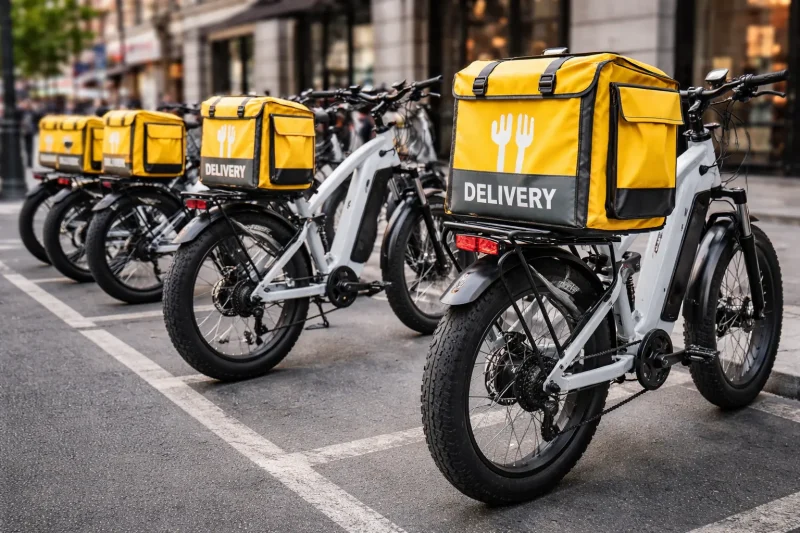
The reasons for this growth are clear and powerful. They show a long-term trend, not a short-term fad. As a manufacturer, I've seen these drivers change how our clients think about their delivery fleets. They are no longer just buying a vehicle; they are investing in a more efficient and sustainable business model. Let's look at each driver more closely.
Last-Mile Delivery Efficiency
In crowded cities, speed is everything. I’ve talked to many logistics managers who complain that their small vans spend more time in traffic than on the move. Cargo e-bikes solve this. They can use bike lanes, take shortcuts, and park easily right at the delivery point. Big companies like Amazon have already deployed them on a large scale in Europe because they've proven to be more efficient for high-density urban routes. This isn't just a theory anymore; it's a validated, scalable solution that directly improves delivery times and customer satisfaction. It means your business can complete more deliveries per hour, which directly boosts your bottom line.
Policy and Compliance Benefits
Governments around the world are actively encouraging the switch to electric mobility. This is a huge advantage for businesses considering cargo e-bikes. For example, the United States offers tax credits that lower the initial purchase price. Many European countries provide direct subsidies for companies that add e-bikes to their fleets. Beyond financial help, there are also operational benefits. In many cities, cargo e-bikes are allowed to use bus lanes and have special access rights, which helps them avoid traffic. In essence, these policies are actively helping you sell the idea of a cargo e-bike fleet to your stakeholders. It's not just an environmental choice; it's a smart financial and operational one, backed by government support.
Favorable Total Cost of Ownership (TCO)
The initial price of a cargo e-bike is just one part of the story. The real win is the low total cost of ownership2 (TCO). A few years ago, the cost of batteries was a major concern. But today, battery prices have dropped significantly while their energy density has increased. A modern e-bike battery can last for over five years of commercial use. When you compare this to the costs of a delivery van—fuel, insurance, parking fees, congestion charges, and maintenance—the e-bike wins easily.
| Cost Factor | Delivery Van | Cargo E-Bike |
|---|---|---|
| Fuel/Energy | High | Very Low |
| Maintenance | High | Low |
| Parking/Fines | High | Minimal |
| Insurance | High | Low |
| Purchase Price | High | Medium |
| Overall TCO | High | Low |
This strong financial case makes the investment in a cargo e-bike fleet not just responsible, but highly profitable over its lifespan.
Which Cargo E-Bike Features Matter Most for Commercial Use?
Choosing the wrong components can destroy your fleet's return on investment. You need bikes that are powerful, reliable, and easy to maintain. So how do you pick the right specs for the job?
For commercial use, you must focus on a mid-drive/hub motor for power, a Pedal-Assist System (PAS)3 for legal compliance, and a high-capacity lithium-ion battery. These features ensure reliability, performance under heavy loads, and a better ROI for your fleet.
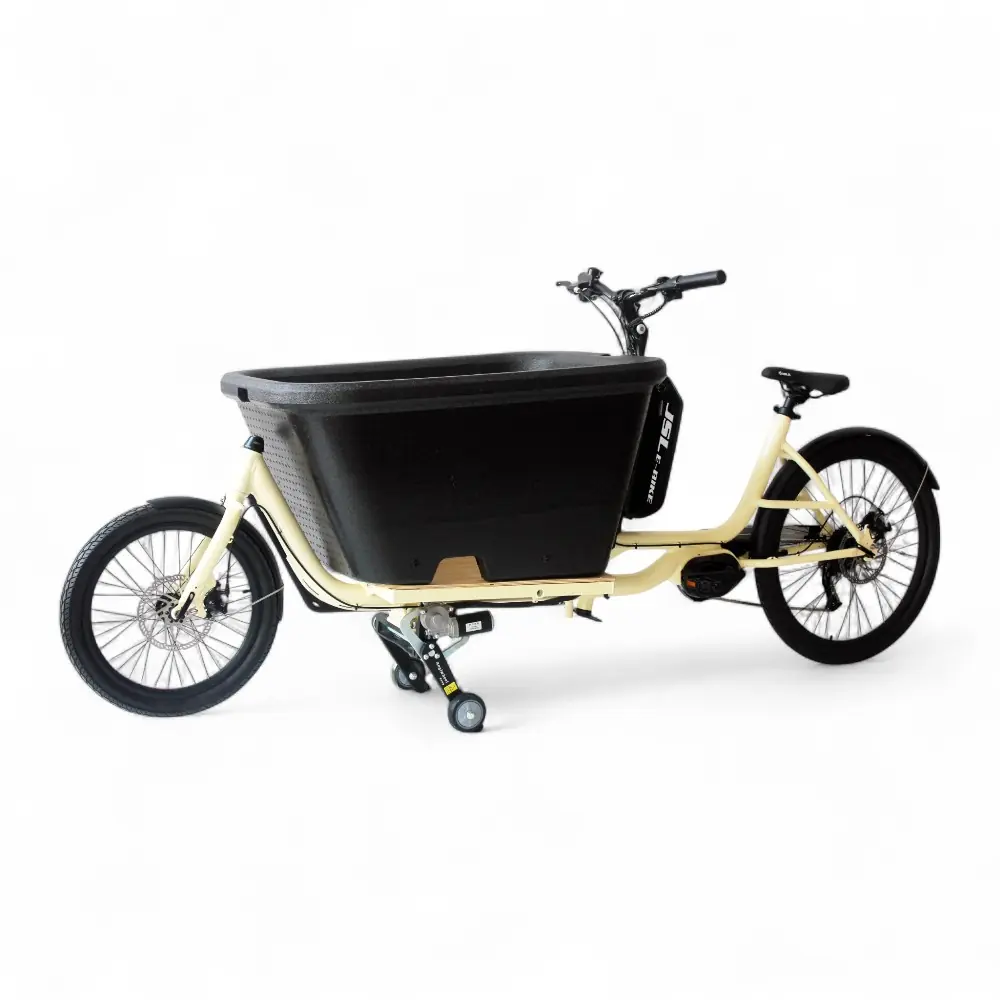
When we design cargo e-bikes for our OEM partners, we don't just pick parts off a shelf. We focus on building a cohesive system that can handle the demands of daily commercial work. The choices you make on core components will determine whether your fleet is an asset or a liability. Here’s what the market data tells us and what we recommend based on our experience.
Drive System: Mid-Drive is King
For a cargo e-bike, the motor placement is critical. A mid-drive motor, which is positioned in the center of the bike frame, is the best choice. It dominates the market with a 54.88% share and is also the fastest-growing segment. The reason is simple: it applies power directly to the drivetrain, which gives it superior performance for carrying heavy loads and climbing hills. This makes the bike feel more balanced and natural to ride, which is important for rider safety and comfort. While hub motors are cheaper, they can't match the torque and efficiency of a mid-drive system for serious commercial applications. For drive activation, Pedal-Assist Systems (PAS) are the standard in Europe and make up 86.62% of the market. However, throttle-on-demand systems are seeing faster growth, especially in North America where regulations are different.
Battery Technology and Drivetrain
The battery is the heart of your e-bike. Lithium-ion batteries are the undisputed standard, holding over 72% of the market. They offer the best combination of energy density, weight, and lifespan. We've completely moved away from lead-acid batteries; they are simply obsolete for this application. An emerging trend we are watching closely is Lithium Iron Phosphate (LFP) batteries, which offer enhanced safety and an even longer cycle life. For the drivetrain, traditional chains are still the most common, with a 61.37% market share, mainly due to their low cost. However, belt drive systems are the fastest-growing option (5.05% CAGR). In Europe, clients increasingly prefer belt drives because they are quiet, clean, and require almost no maintenance—a huge plus for commercial fleets where downtime is lost money.
Power and Price Trends
The power output of the motor is another key decision. The 251–350W range currently has the largest market share (37.02%), largely driven by the 250W power limit for street-legal e-bikes in the EU. However, the 501–600W segment is the fastest-growing. This reflects the demand in the US market for more power to handle heavier loads and greater speeds. What's most interesting is the trend in pricing. While the $1,500–$2,499 segment is the largest, the $2,500–$3,499 segment is growing faster. This tells us that businesses are moving away from cheap, entry-level bikes. They understand that reliability is key and are willing to invest in higher-quality, better-equipped e-bikes that are designed as systematic, long-term assets for their fleets.
Where Are the Biggest Markets for Cargo E-Bikes?
Expanding your e-bike business feels risky if you don't know where the real demand is. You could waste a lot of money on a slow market. So, where should you focus your efforts?
The Asia-Pacific region is the largest market by volume and is the world's manufacturing hub. However, North America is the fastest-growing market, while Europe is a stable, mature market with high standards and strong infrastructure.
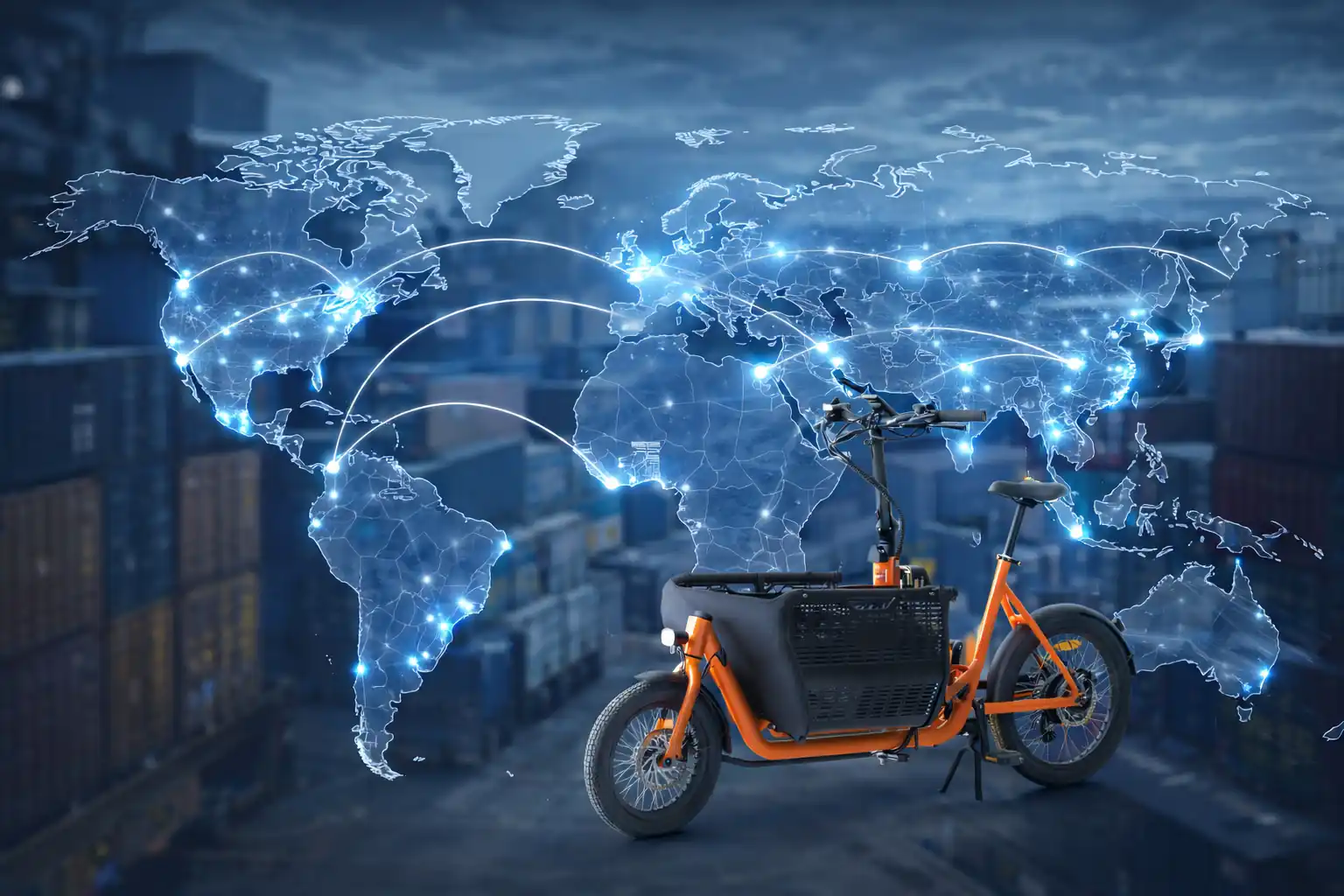
Understanding the regional differences is crucial for any business in this space. You can't use the same strategy everywhere. As a global manufacturer, we tailor our products and strategies for each of these key markets. Here’s a breakdown of what you need to know about each region to plan your expansion effectively.
North America: The Growth Engine
North America is where we see the most exciting growth, with a projected CAGR of 6.95%. This boom is fueled by two main factors. First, government incentives, like federal tax credits, are making it more affordable for businesses to invest in e-bike fleets. Second, the explosion of e-commerce has created huge demand for fast, same-day delivery, especially in dense urban areas. Companies are realizing that cargo e-bikes are often faster and cheaper than vans for these routes. The market here is less constrained by power limits, so there's strong demand for more powerful bikes (500W+). For any brand looking for rapid growth, North America is a top-priority market.
Europe: The Mature, High-Standard Market
Europe is the most mature market for cargo e-bikes. It's characterized by steady, predictable growth. This stability comes from strong government policies and excellent infrastructure. Cities across Europe have invested heavily in dedicated bike lanes, charging stations, and low-emission zones that restrict van access, making cargo e-bikes a necessity, not just an option. However, this market also has high barriers to entry. Products must comply with strict regulations (like the 250W motor limit for EN15194) and meet high customer expectations for quality and durability. For brands that can meet these standards, Europe offers a stable and profitable market with a strong preference for premium, low-maintenance features like belt drives and integrated systems.
Asia-Pacific: The Manufacturing and Volume Hub
The Asia-Pacific region is the giant of the cargo e-bike world, holding the largest market share at 47.55%. This is primarily because China is the heart of the global e-bike supply chain. As a manufacturer based here, we have direct access to the best components, technology, and production talent. This allows us to offer competitive pricing without sacrificing quality. The region is not just a manufacturing center; it's also a massive internal market. Countries across Asia are facing their own urbanization and pollution challenges, and demand for electric logistics solutions is growing rapidly. This makes the Asia-Pacific a dual-opportunity region: it's the best place to build your products and a significant market to sell into.
What Challenges Could Slow Down Your Cargo E-Bike Business?
You're excited about the cargo e-bike opportunity, but ignoring the risks can be costly. High initial costs and operational hurdles can stop a fleet project before it even starts.
The main challenges are the high upfront investment, a limited payload capacity compared to vans, a lack of widespread public charging infrastructure4, and inconsistent regulations across different regions, which can complicate operations and supply chains.
While the future for cargo e-bikes is bright, it's important to be realistic about the hurdles. We always advise our partners to understand these challenges so they can plan for them. Acknowledging these limitations allows you to build a smarter, more resilient business strategy instead of being caught by surprise. Here are the four biggest factors you need to consider.
High Upfront Cost
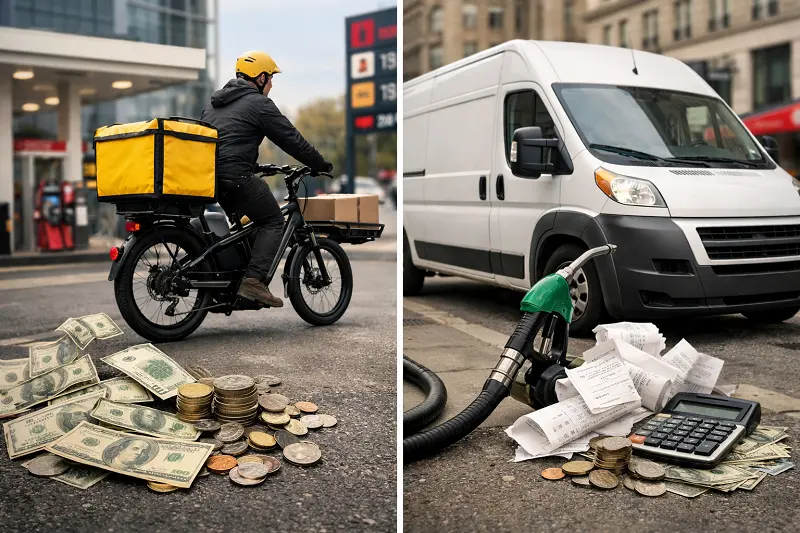
Let's be honest: a commercial-grade cargo e-bike costs more than a standard bicycle. For a small business looking to buy its first one or two, this initial investment can feel steep. Unlike a large corporation, they may not have the capital to launch a full fleet right away. This is a significant barrier for smaller customers to enter the market. However, we always frame this conversation around the Total Cost of Ownership (TCO). When you factor in the savings on fuel, maintenance, parking, and taxes, the e-bike pays for itself much faster than a van. The challenge is helping smaller clients see past the initial price tag to the long-term value.
Limited Payload and Range
A cargo e-bike is not a van. Most models have a payload capacity between 100-200 kg. A delivery van can carry over 1,000 kg. This means you cannot simply replace every van in your fleet with an e-bike. Instead, the smart strategy is to build a mixed fleet. Cargo e-bikes are perfect for delivering smaller packages in dense urban zones, while vans can handle the large, bulky items or long-distance hub-to-hub transport. Understanding this limitation is key to deploying cargo e-bikes successfully. They are a specialized tool designed for a specific job: mastering the last mile.
Infrastructure Gaps
In an ideal world, every city would have a dense network of public charging stations, dedicated loading zones for cargo bikes, and secure parking. We are not there yet. While infrastructure is improving rapidly in many European cities, it's still a major challenge in emerging markets and many parts of North America. This means businesses often have to build their own charging infrastructure at their depots. Fleet managers must carefully plan routes to ensure bikes can complete their shifts without running out of power. As an OEM, we address this by offering high-capacity batteries and efficient systems, but the public infrastructure gap remains a real operational constraint.
How Is the Competitive Landscape for Cargo E-Bikes Evolving?
The market is crowded with players, from big bicycle brands to specialized startups. How do you choose a partner who understands the future of logistics, not just how to assemble a bike?
The market is fragmented and is shifting from simply selling bikes to providing complete logistics solutions. The key trend is integrating hardware (the bike), software (fleet management), and services (maintenance). Success now depends on finding a partner who delivers a total system.
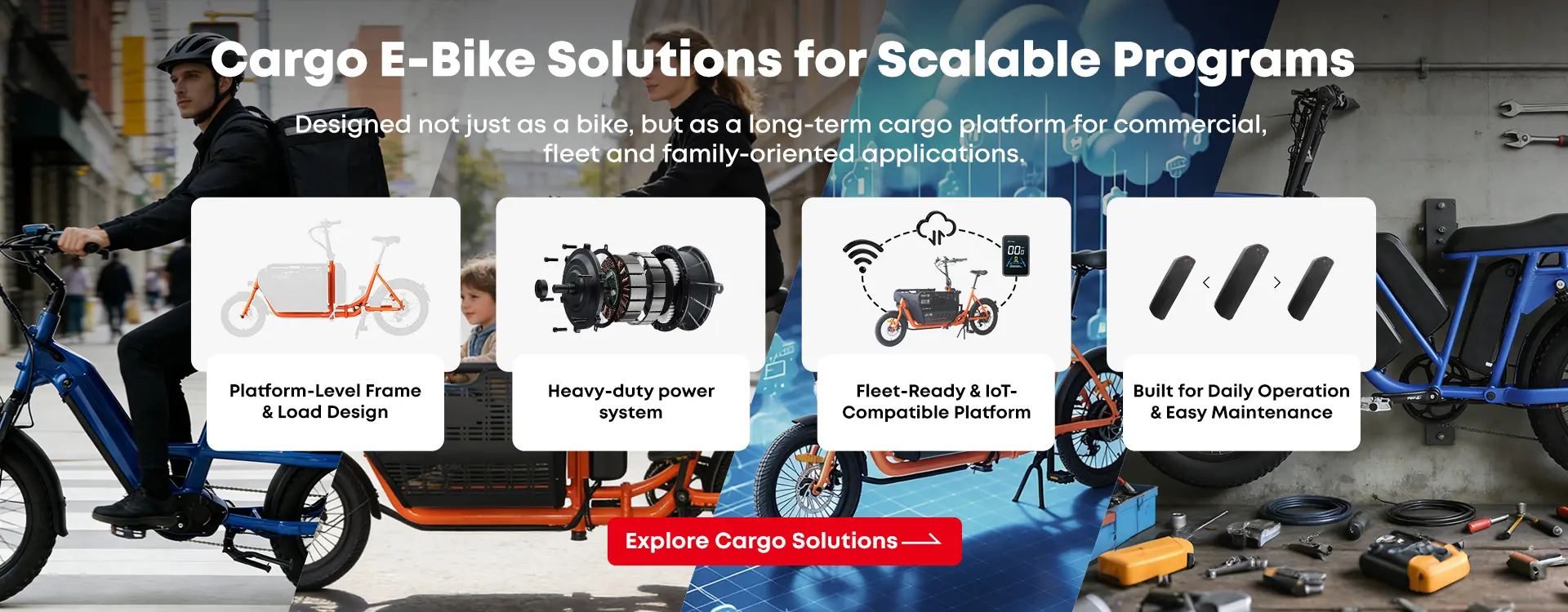
The game is changing. In my two decades in this industry, I've seen many trends com
Staying informed about environmental regulations is crucial for compliance and strategic planning in logistics. ↩
Understanding TCO helps businesses make informed decisions about fleet investments and operational costs. ↩
Understanding PAS can ensure compliance and enhance the riding experience for e-bike users. ↩
Addressing infrastructure challenges is crucial for efficient e-bike fleet operations. ↩